
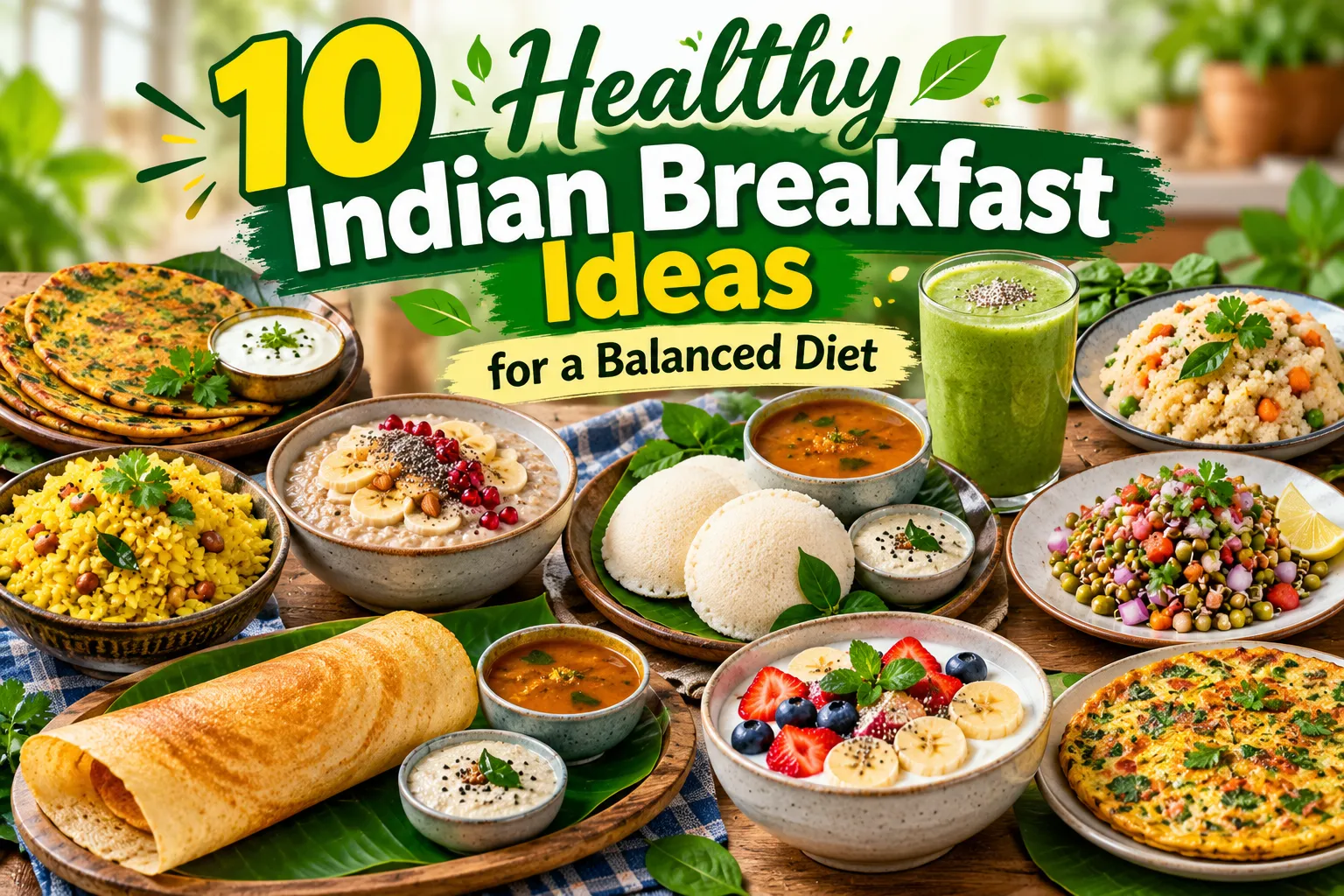
A healthy Indian breakfast can be flavorful, affordable and easy to prepare. The goal is not to choose one miracle food, but to combine fiber-rich carbohydrates, protein, vegetables or fruit, and moderate amounts of healthy fats. Here are ten nutritious ideas for busy mornings.
1. Vegetable Poha
Poha combines flattened rice with peas, carrots, onions, curry leaves and peanuts. The rice provides energy, vegetables add fiber and micronutrients, and peanuts contribute healthy fats. Serve with plain curd to add protein.
2. Moong Dal Chilla
Soak moong dal, blend it with ginger and spices, and cook thin pancakes on a lightly oiled pan. Add spinach or grated carrots. Pair with mint chutney and yogurt for a filling, protein-containing breakfast.
3. Vegetable Oats Upma
Cook rolled oats with mustard seeds, curry leaves, peas, beans and carrots. Oats contain beta-glucan, a soluble fiber associated with improved LDL cholesterol levels. Add roasted peanuts or curd for a more satisfying meal.
4. Idli With Sambar
Steamed idlis made from fermented rice and urad dal batter are a convenient breakfast. Serve them with lentil-based sambar full of vegetables to add protein and fiber. Adjust the number of idlis to your appetite and energy needs.
5. Besan Chilla
Mix gram flour with water, onions, tomatoes, coriander and finely chopped vegetables. Cook with a small amount of oil. Besan supplies plant protein and fiber; plain curd makes a useful accompaniment.
6. Vegetable Dalia
Simmer broken wheat with peas, beans, carrots and spices for a warm savory porridge. Dalia offers carbohydrates and fiber. Adding cooked lentils or yogurt improves the overall protein balance.
7. Paneer Stuffed Whole Wheat Paratha
Fill whole wheat dough with crumbled paneer, coriander and spinach, then cook using moderate oil. Paneer contributes protein and calcium, while whole wheat adds fiber. Enjoy with plain curd rather than extra butter.
8. Cooked Sprouts Salad With Whole Grain Toast
Toss thoroughly cooked mung sprouts with cucumber, tomatoes, onions, lemon and roasted cumin. Serve with whole grain toast. Cooking sprouts is important because raw sprouts can carry harmful bacteria.
9. Ragi Dosa With Sambar
Use finger millet flour with urad dal or another pulse to prepare dosa batter. Ragi contributes calcium and grain variety, while sambar adds vegetables and lentil protein. Cook with moderate oil.
10. Masala Omelette With Whole Wheat Toast
Whisk eggs with onions, tomatoes, coriander and spinach, then cook in a lightly oiled pan. Eggs supply complete protein, vitamin B12 and choline. Add whole wheat toast and fruit for fiber and carbohydrates.
How to Build a Balanced Breakfast
Include a protein source such as dal, eggs, paneer or curd; choose whole grains when practical; add vegetables or fruit; and use oil, salt and added sugar in moderation. Portions should match your appetite, activity level and individual health needs.
Which Indian Breakfast Is Best for Weight Management?
No single breakfast causes weight loss. Meals with protein and fiber, such as moong dal chilla, oats upma or eggs with whole wheat toast, may help you feel satisfied. Long-term weight management depends on your overall eating pattern and lifestyle.
Frequently Asked Questions
Is poha a healthy breakfast?
Yes. Add vegetables and a protein source, such as curd, to make poha more balanced.
Is idli good for breakfast?
Steamed idli with vegetable-rich sambar can be a nutritious choice.
Which Indian breakfasts contain more protein?
Moong dal chilla, besan chilla, paneer paratha and egg omelettes contain useful amounts of protein; exact amounts depend on portions and ingredients.
Can people with diabetes eat these breakfasts?
Many can fit into an individualized eating plan, but carbohydrate portions and blood glucose responses vary. Seek advice from a qualified healthcare professional.
Conclusion
From poha and idli to ragi dosa and masala omelettes, Indian cuisine offers many ways to start your day well. Choose a variety of foods and focus on balance rather than restrictive rules.
Disclaimer: This article is for general educational purposes and does not replace personalized medical or nutrition advice.